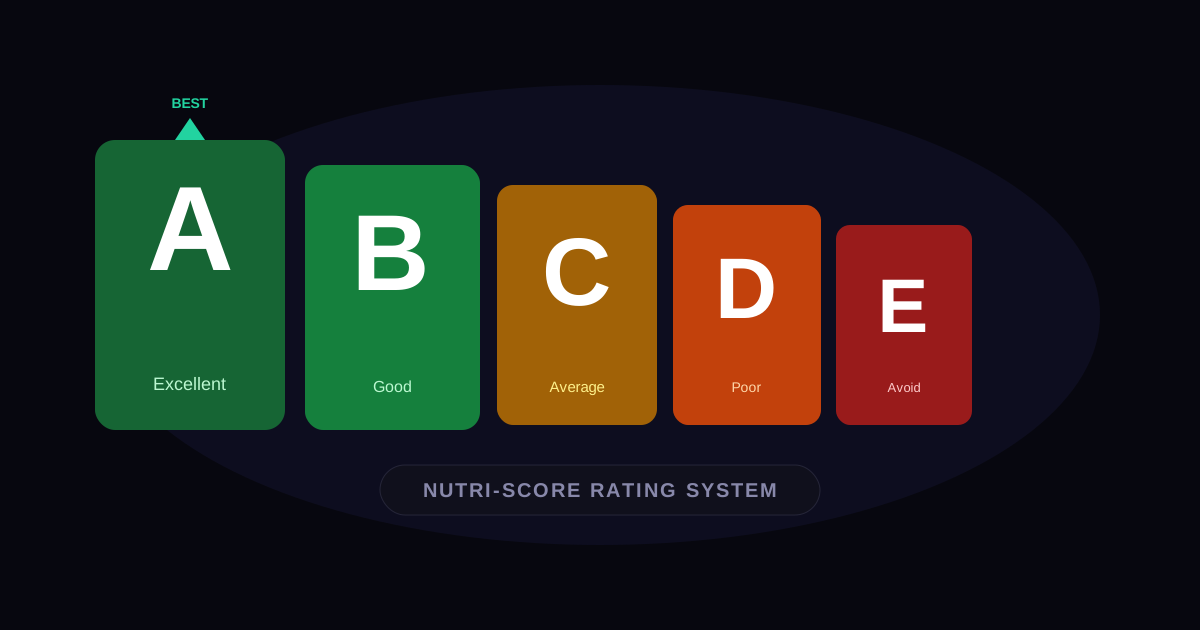
You have probably seen the colourful A-to-E label on the front of food packaging. It looks simple — a green A means healthy, a red E means not so healthy. But how exactly is the score calculated? And should you really trust it when making food choices? Here is everything you need to know about Nutri-Score.
What is Nutri-Score?
Nutri-Score is a front-of-pack nutrition label developed in France in 2017 and now used across much of Europe, including France, Belgium, Germany, the Netherlands, Spain and Switzerland. It rates food products on a scale from A (best) to E (worst) using a colour-coded system.
The system was created to help consumers make healthier choices at a glance — without needing to read and compare lengthy nutrition tables on the back of packaging.
How is Nutri-Score Calculated?
The score is calculated per 100g or 100ml of the product. It assigns positive and negative points based on specific nutrients, then subtracts the positive from the negative to get a final score. The final score determines the letter grade.
Negative Points (things to limit)
The following nutrients increase the score number (worse rating):
- Energy — total calories per 100g
- Saturated fat — unhealthy fats linked to heart disease
- Total sugars — including natural and added sugars
- Sodium — salt content
Positive Points (things to favour)
The following reduce the score number (better rating):
- Fruit, vegetables and legumes — percentage content
- Fibre — dietary fibre content
- Protein — total protein content
What Score Gets What Grade?
| Final Score | Grade | Colour | Meaning |
|---|---|---|---|
| -15 to -1 | A | Dark green | Excellent nutritional quality |
| 0 to 2 | B | Light green | Good nutritional quality |
| 3 to 10 | C | Yellow | Average nutritional quality |
| 11 to 18 | D | Orange | Poor nutritional quality |
| 19 to 40 | E | Red | Very poor nutritional quality |
Real-World Examples
To understand how Nutri-Score works in practice, here are some typical ratings for well-known product types:
| Product Type | Typical Score | Why |
|---|---|---|
| Fresh vegetables | A | High fibre, low calories, no sugar or salt |
| Plain yogurt | A or B | High protein, low sugar |
| Whole grain bread | B | Good fibre, moderate salt |
| Orange juice | C | High natural sugar despite vitamins |
| Cheese | C or D | High saturated fat and sodium |
| Chocolate spread | E | Very high sugar and saturated fat |
| Cola drinks | E | Very high sugar, zero nutrition |
| Salted crisps | E | High fat, salt and calories |
Limitations of Nutri-Score
Nutri-Score is a useful tool, but it has some well-known limitations you should be aware of:
It does not account for portion size
Nutri-Score is calculated per 100g, not per realistic serving. Olive oil scores a D because it is high in fat per 100g — but a typical portion is only 10ml. Meanwhile, a product scoring A might be eaten in much larger quantities.
It penalises natural sugars
Nutri-Score does not distinguish between added sugar and naturally occurring sugar. This is why pure fruit juice often scores C or D despite containing vitamins and minerals — its natural fruit sugar counts against it.
It is voluntary
Food manufacturers choose whether to display Nutri-Score on their packaging. Some brands with lower-scoring products simply opt out. This means the absence of a label does not mean the product is healthy.
It covers processed foods best
The algorithm is calibrated for packaged and processed foods. Fresh, unprocessed foods like meat, fish and eggs are not always rated fairly by the system.
"Nutri-Score is a helpful starting point, but it works best when comparing similar products — for example, choosing between two breakfast cereals or two types of yogurt."
Is Nutri-Score Available Worldwide?
Currently, Nutri-Score is mainly used in Western Europe. It is not mandatory even there — each country has chosen to adopt it at different levels. It is not used in the United States, UK (which uses Traffic Light labelling instead), or most of Asia, the Middle East and Africa.
However, you can still check the Nutri-Score of millions of products globally using ProductBarcode.com — we display the rating whenever the data is available from the Open Food Facts database.
How to Use Nutri-Score When Shopping
Here are some practical tips for using Nutri-Score effectively:
- Compare within categories — use it to choose the better option between two similar products, not to compare a salad with a chocolate bar
- Look at the full label — always check the actual nutrition table for sodium, saturated fat and added sugar, especially if Nutri-Score is absent
- Do not avoid all C and D products — olive oil, cheese and dark chocolate are nutritious despite lower scores
- Prioritise unprocessed foods — fresh fruit, vegetables, fish and lean meats are always your best nutritional choice regardless of any scoring system
🔍 Check the Nutri-Score of any product
Search by product name or barcode to instantly see the Nutri-Score, full ingredients, allergens and nutrition facts for millions of products worldwide.
Search ProductBarcode.com →