For the 250 million people worldwide living with food allergies, reading ingredient labels is not optional — it is a matter of health and safety. But even the most careful shoppers can be caught off guard by allergens hiding in unexpected products. From gluten in soy sauce to dairy in crisps, here are 12 hidden allergens that commonly surprise people.
⚠ Important disclaimer: This article is for informational purposes only. If you have a serious food allergy, always read the full ingredient label and allergen statement on the product packaging before consuming. Always consult your doctor or dietitian for personalised medical advice.
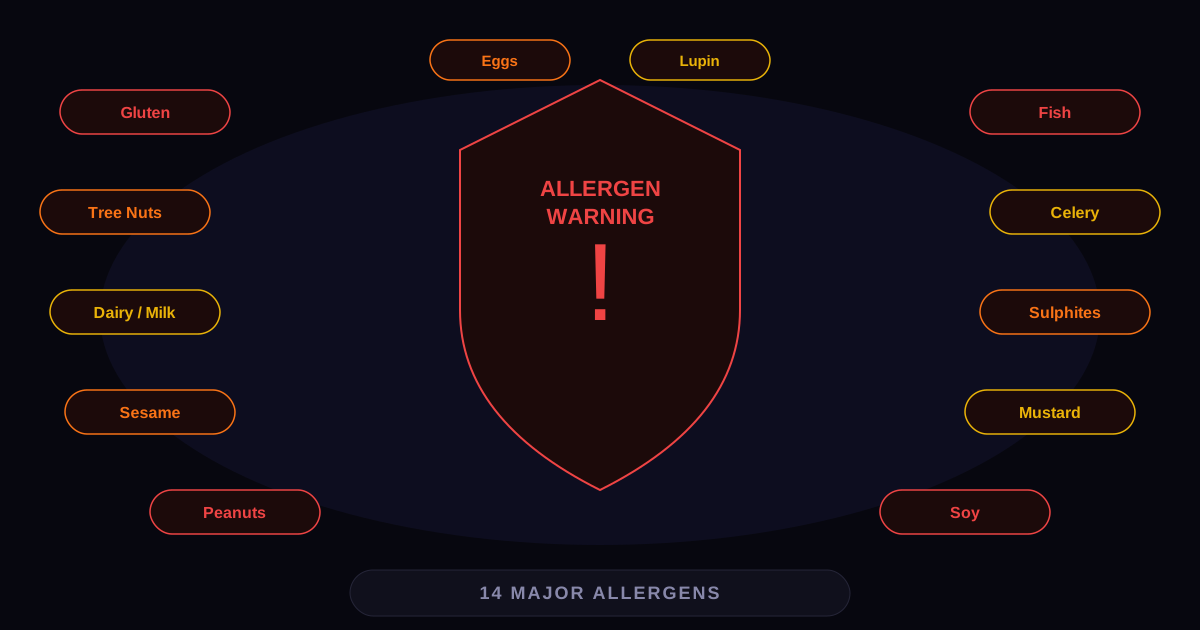
The 14 Major Allergens
In Europe and the UK, food manufacturers must clearly label 14 major allergens whenever they appear in a product. These are:
- Cereals containing gluten (wheat, rye, barley, oats)
- Crustaceans (prawns, crabs, lobster)
- Eggs
- Fish
- Peanuts
- Soybeans
- Milk (including lactose)
- Tree nuts (almonds, hazelnuts, walnuts, cashews, pecans, pistachios, macadamia)
- Celery
- Mustard
- Sesame seeds
- Sulphur dioxide and sulphites
- Lupin
- Molluscs (oysters, mussels, squid)
Despite mandatory labelling, allergens can still hide in plain sight under unusual ingredient names or appear in products where you would never expect them.
12 Hidden Allergens That May Surprise You
1
Gluten in Soy Sauce
Found in: Soy sauce, teriyaki sauce, some marinades
Traditional soy sauce is brewed with wheat as well as soybeans. A standard 5ml serving can contain enough gluten to trigger a reaction in people with coeliac disease. Look for specifically labelled gluten-free tamari as a safe alternative.
2
Milk in Crisps and Chips
Found in: Flavoured crisps, cheese-flavoured snacks, some plain crisps
Many crisp flavourings — including salt and vinegar, prawn cocktail and even some plain varieties — use milk powder or whey as a base for the seasoning blend. Dairy-free shoppers need to check even plain-seeming flavours carefully.
3
Tree Nuts in Chocolate Spread
Found in: Hazelnut spreads, some chocolate bars, praline fillings
Products like Nutella are obviously hazelnut-based, but hazelnuts also appear in many generic chocolate spreads, praline chocolates and biscuit fillings where the nut content is less prominent on the front of pack.
4
Eggs in Fresh Pasta
Found in: Fresh pasta, pasta dough, some noodles
Dried pasta is typically egg-free, but fresh pasta — including filled varieties like ravioli and tortellini — almost always contains eggs. Many Asian noodles also contain egg, even when the packaging does not prominently feature it.
5
Fish in Worcestershire Sauce
Found in: Worcestershire sauce, Caesar dressing, some pasta sauces
Traditional Worcestershire sauce contains anchovies as a key ingredient. It is used as a flavour enhancer in many recipes and ready meals, making it a hidden fish allergen in dishes that appear entirely meat or vegetable-based.
6
Sesame in Bread and Bakery Products
Found in: Burger buns, artisan breads, breadsticks, crackers
Sesame seeds are commonly used as a topping on baked goods, but sesame oil and tahini (sesame paste) are also used in many flatbreads, crackers and dips. In 2023, sesame became a mandatory declared allergen in the USA for the first time.
7
Sulphites in Dried Fruit and Wine
Found in: Dried apricots, sultanas, wine, cider, some jams
Sulphur dioxide (E220) and sulphites are used as preservatives and can trigger asthma-like reactions in sensitive individuals. Dried fruits like apricots and sultanas often contain high levels — the distinctive bright orange colour of dried apricots is actually due to sulphite treatment.
8
Mustard in Salad Dressings
Found in: Vinaigrettes, honey mustard dressings, some mayonnaises
Mustard is a major allergen that can cause severe reactions. It hides in many salad dressings, particularly vinaigrettes, and is also used as an emulsifier in some ready-made sauces. Mustard powder and mustard oil are common forms found in Asian and Indian cooking.
9
Lupin in Gluten-Free Products
Found in: Gluten-free bread, high-protein flour blends, some pastries
Lupin is a legume increasingly used in gluten-free and high-protein baked goods as a flour substitute. It is closely related to peanuts and soy, so people with peanut allergies may also react to lupin. It is one of the least well-known of the 14 major allergens.
10
Soy in Processed Meats
Found in: Sausages, burgers, deli meats, meat substitutes
Soy protein is widely used as a filler and binder in processed meat products including sausages, burgers, meatballs and sliced deli meats. It is also the main ingredient in many meat-free products, so both meat-eaters and vegetarians need to be alert to it.
11
Celery in Stock Cubes and Soups
Found in: Stock cubes, bouillon, vegetable soups, ready meals
Celery — including celery salt, celery seed and celery extract — is a common ingredient in stock cubes, soups and ready meals. Celery allergy is more common in Central Europe and can cause reactions ranging from oral tingling to anaphylaxis in severe cases.
12
Peanuts in Asian Sauces
Found in: Satay sauce, pad Thai, some curry sauces, mole
Peanuts are a key ingredient in many Asian and Latin American dishes and sauces. Even small traces can trigger life-threatening reactions in highly sensitive individuals. Ready-made versions of dishes like pad Thai or satay often contain significantly more peanut than expected.
How to Check for Hidden Allergens on Any Product
The safest way to identify allergens in any packaged product is to check the full ingredient list and the allergen statement. In Europe, major allergens must be highlighted in bold within the ingredients list. In the USA, they must appear in a separate "Contains" statement.
🔍 Use ProductBarcode.com: Search any product by name or barcode to instantly see the full ingredient list and all declared allergens — covering millions of products from 150 countries. It is free and takes seconds.
Tips for Shoppers with Food Allergies
- Always read the full label — even on products you have bought before, as recipes change
- Look for "may contain" warnings — these indicate potential cross-contamination during manufacturing
- Be cautious with loose or unpackaged food — allergen information may not be available
- Use a barcode scanner app — services like ProductBarcode.com can quickly pull up full ingredient and allergen data
- When eating out — always inform staff of your allergy and ask about ingredients, do not assume a dish is safe
- Carry your medication — if prescribed an EpiPen or antihistamines, always have them with you
"Food allergy reactions send someone to hospital every three minutes in the UK alone. Knowing where allergens hide is one of the most important steps in staying safe."
⚠ Check allergens in any product instantly
Search by product name or barcode to see the complete ingredient list and all declared allergens for millions of products worldwide. Free to use.
Search ProductBarcode.com →